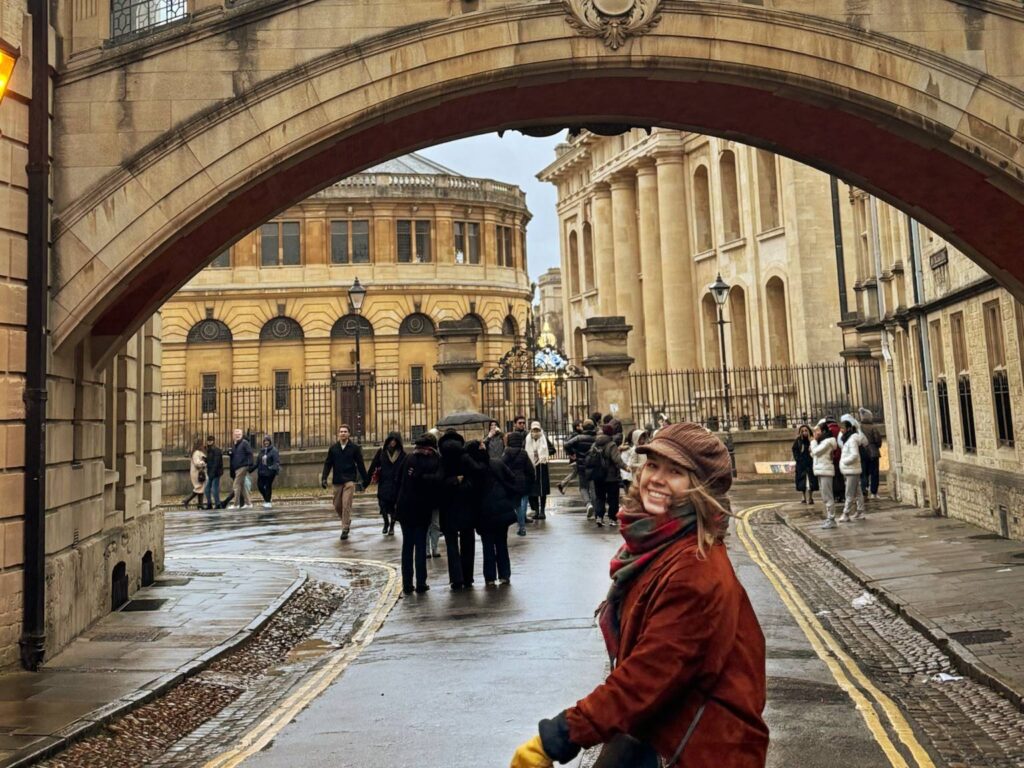
With a surf instructor from Peru, incredibly delicious pintxos, and a lot of respect for the powerful Atlantic Ocean, I unexpectedly fell in love with surfing again during my journey through the Spanish Basque Country.
→ Book surf lessons locally (Mundaka, Bilbao, Zarautz – where I surfed)
→ TIP: Fun tours without a car (Bilbao, Gaztelugatxe including a wine tour)
When people think of surfing in Spain, most probably imagine Fuerteventura or the sunny beaches of Andalusia. That was exactly what I thought too. Before my trip, I had no idea that northern Spain had developed into one of the best surfing regions in Europe. That’s why a friend and I decided to make our way to the Spanish Basque Country – not by plane, but in a relaxed van journey.
Our trip started in Barcelona and took us across northern Spain. Along the way, we made spontaneous stops, including the wine festival in Logroño and Gaztelugatxe, before we finally reached the Atlantic coast, known for its surfing culture. From that moment on, it felt like everything revolved around the tides of northern Spain.
Is the Basque Country good to surf as a beginner?
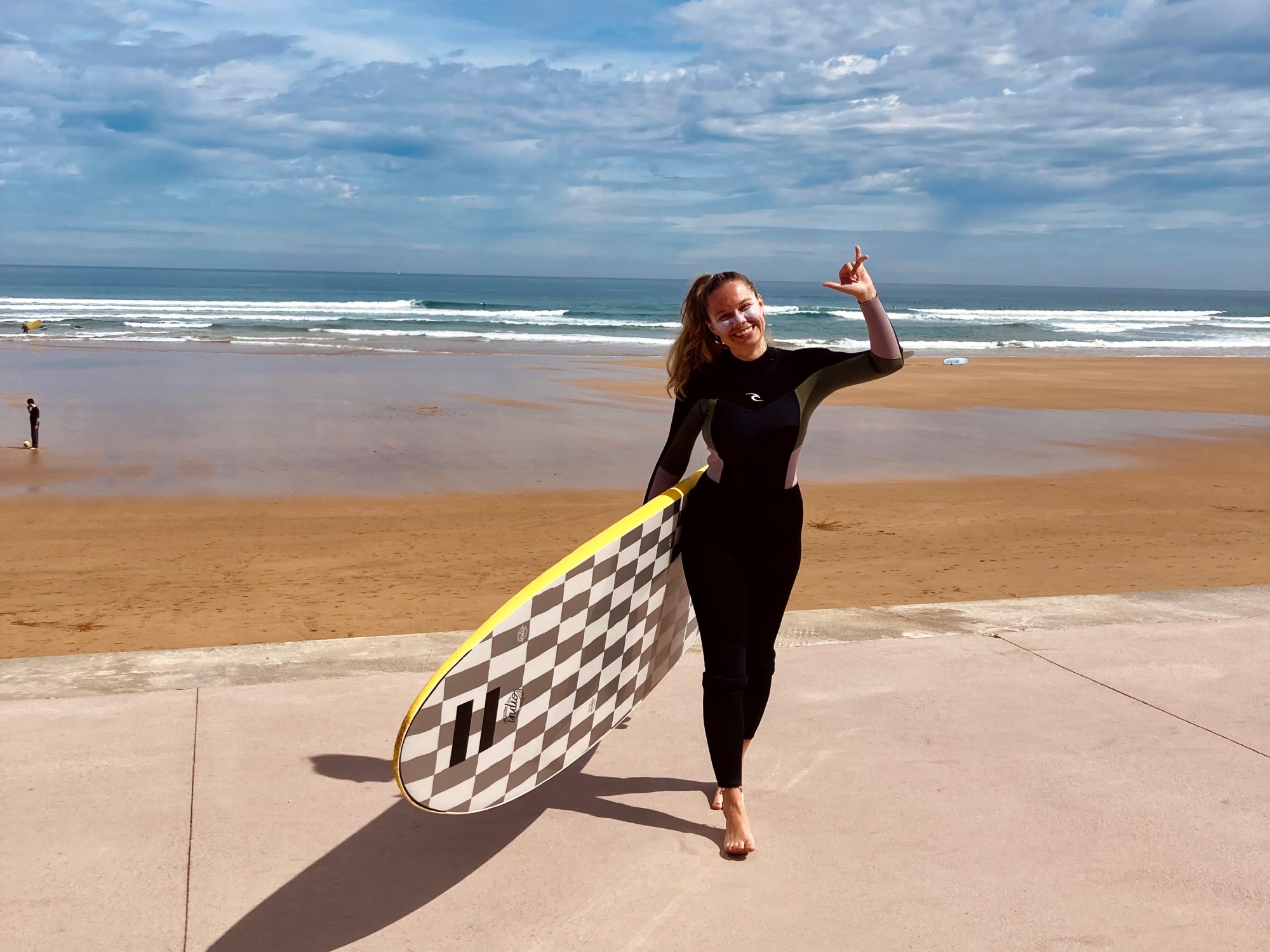 Proudly holding my board
The short answer is: yes – but not in the way you might expect.
Even though I already had some previous surfing experience, the Spanish Basque Country quickly brought me back down to earth. I caught my first waves a few years ago in Costa Rica. Later, I even spent a week at a surf school in Fuerteventura. So, to be honest, I thought I had a pretty good understanding of the basics by then.
But every coastline has its own character.
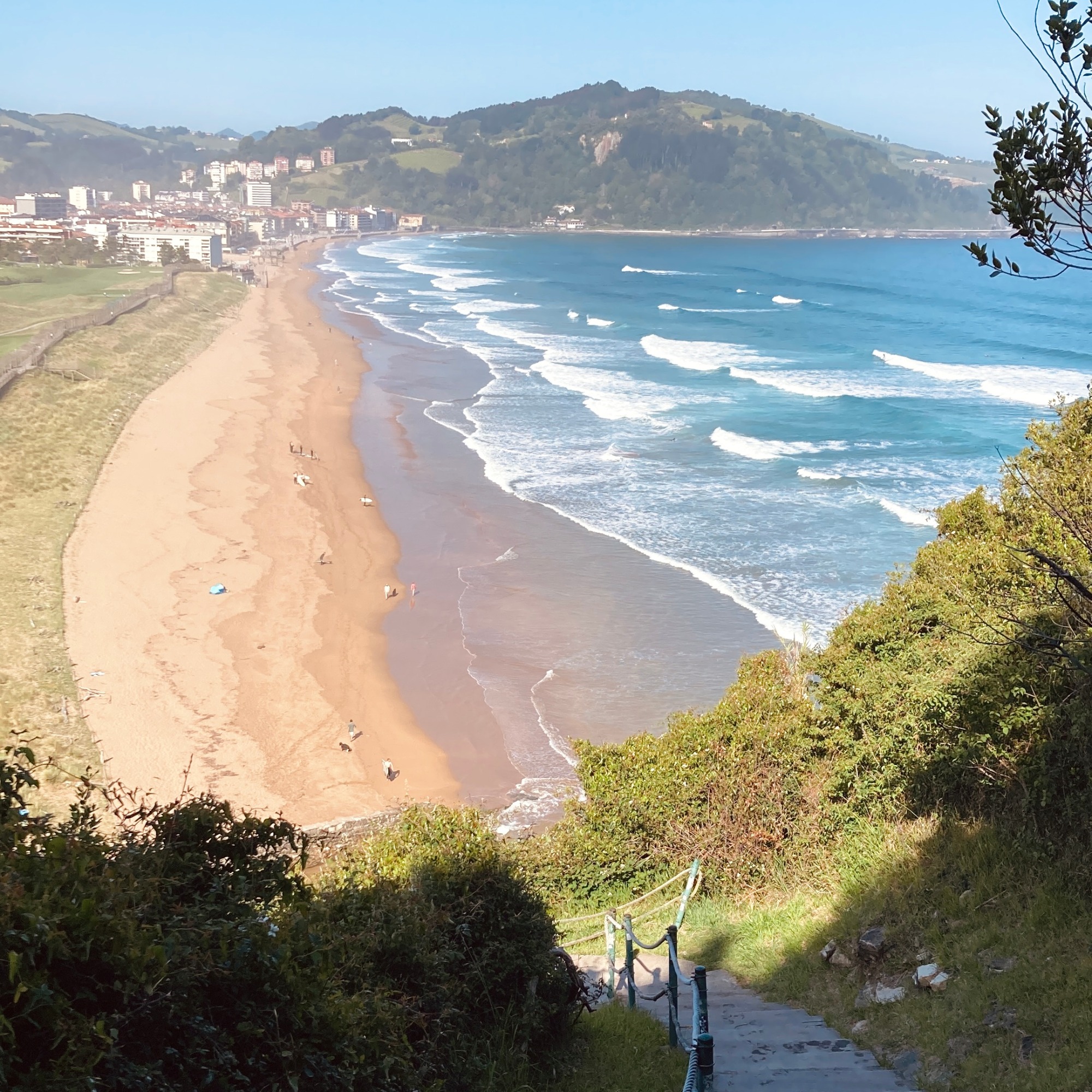
Surf Spot Zarautz
If you want to try surfing in Spain for beginners for the first time, the Basque Country still offers excellent conditions. Especially Zarautz is considered one of the most popular surf spots for beginners. The wide sandy beach provides plenty of space, several peaks help spread out the surfers, and along the promenade you’ll find surf shops and surf schools lined up next to each other.
San Sebastián with Zurriola Beach and Sopelana are also great options for beginners. Mundaka, however, is a completely different story. This is where legendary waves are created, attracting surfers from all over the world – but mostly experienced surfers rather than beginners. I was already impressed just watching the professionals from the beach.
When is the best time for surfing in the Basque Country?
The Basque Country is one of the best regions for surfing in Spain and can be visited all year round. However, the conditions change significantly depending on the season.
My tip if you want to try surfing in Spain for beginners:
Spring: Fewer visitors, pleasant conditions, and good waves.
Summer: Ideal for beginners and surf courses, but with more visitors and busy bars.
Autumn: The best waves for experienced surfers.
Winter: Powerful swells – more suitable for advanced surfers.
How to get from Barcelona to the Basque Country?
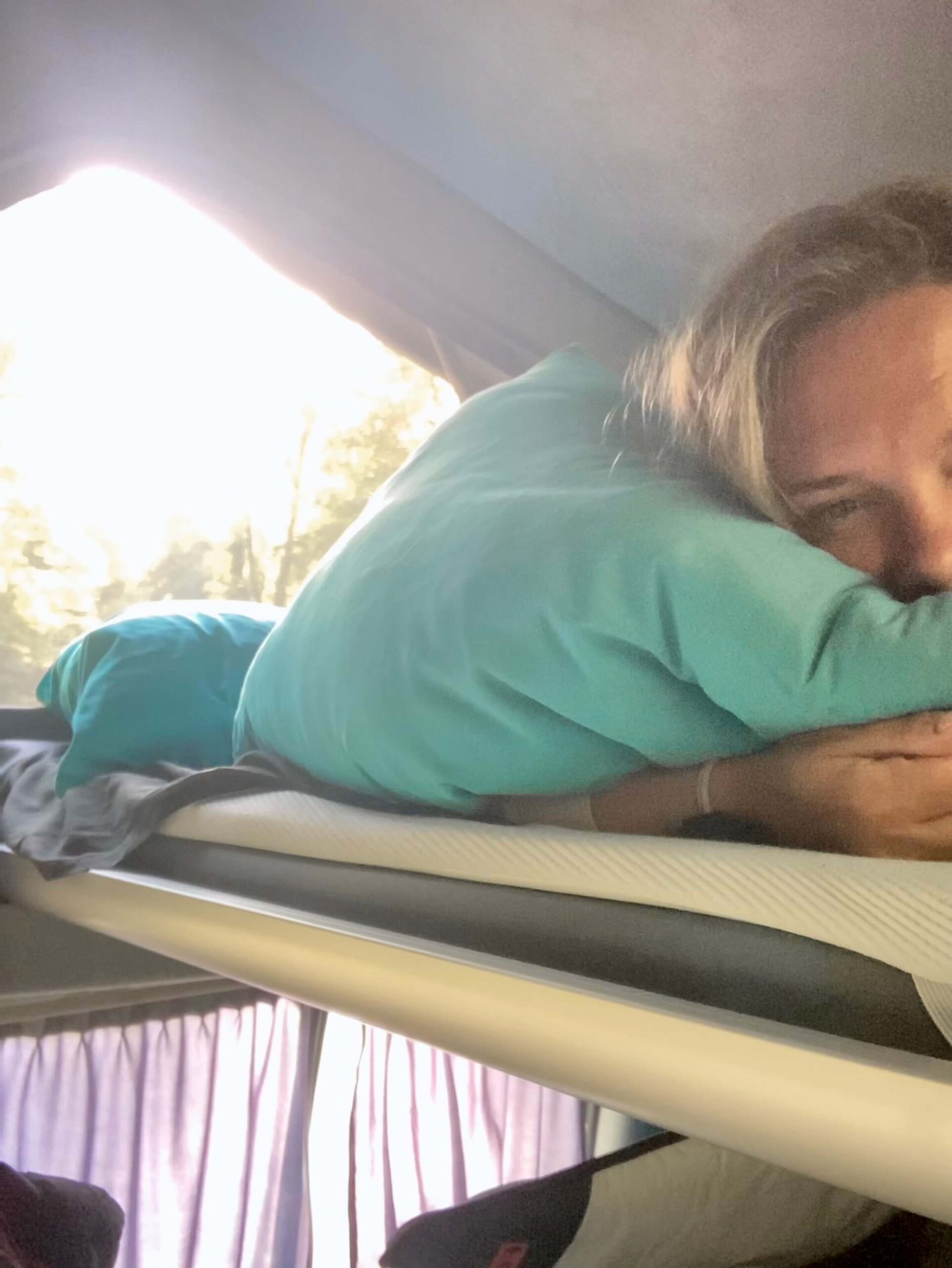
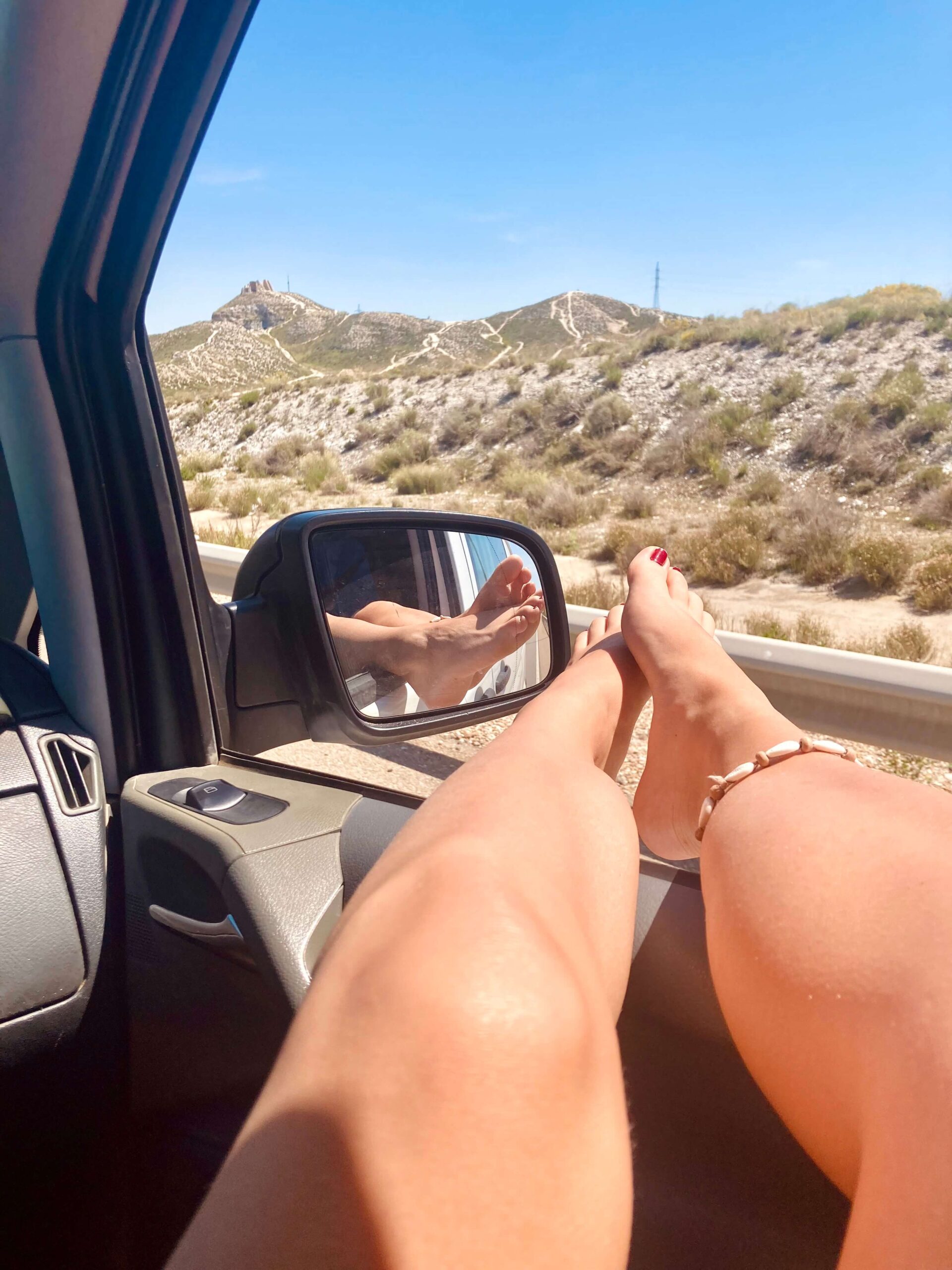
Traveling with the Van
Travelling by van was probably the best decision we made during the entire trip. It allowed us to stop whenever we wanted, discover small villages, and simply stay wherever we liked.
Between Barcelona and the Basque coast, there are many beautiful places worth exploring.
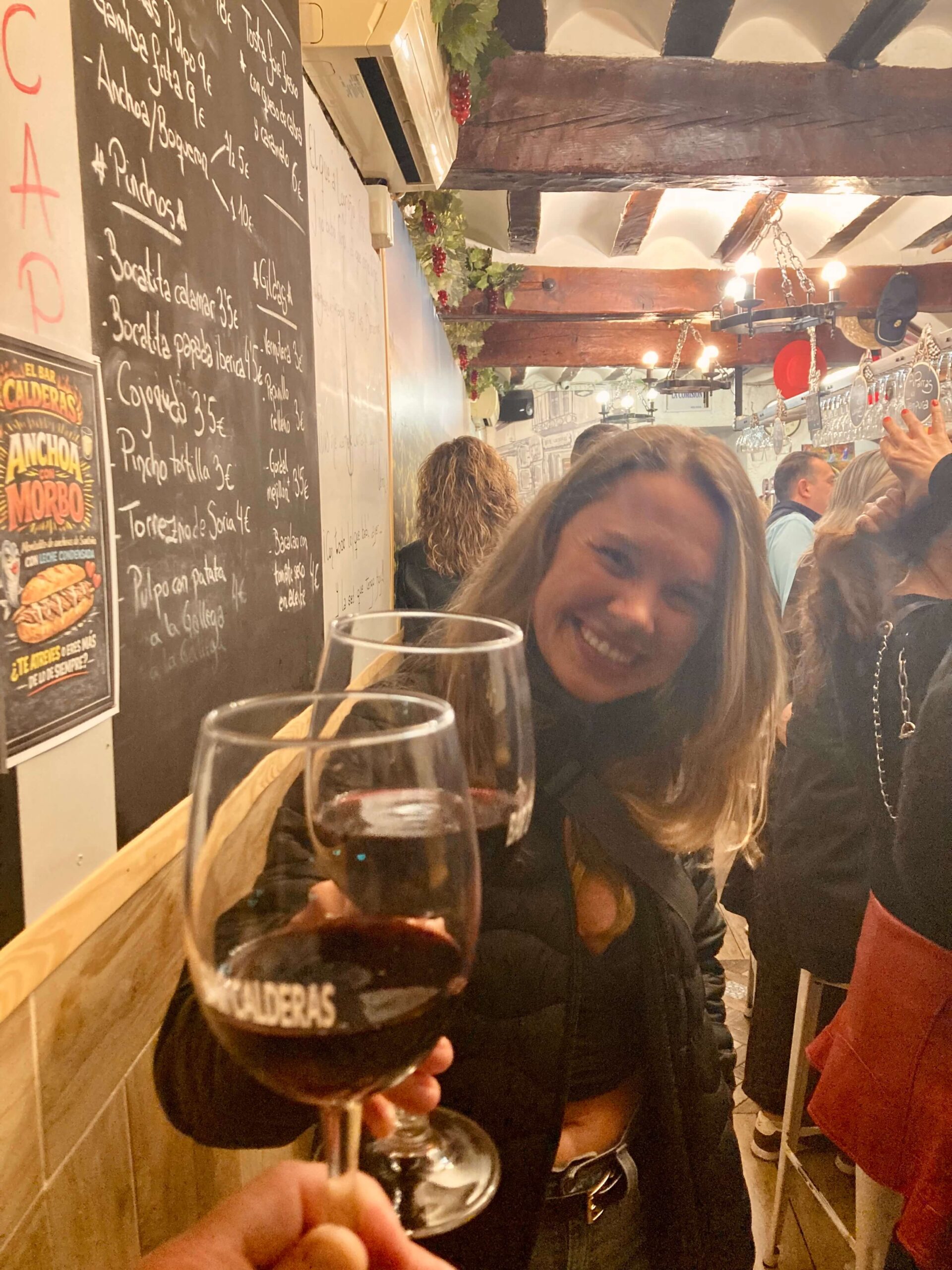
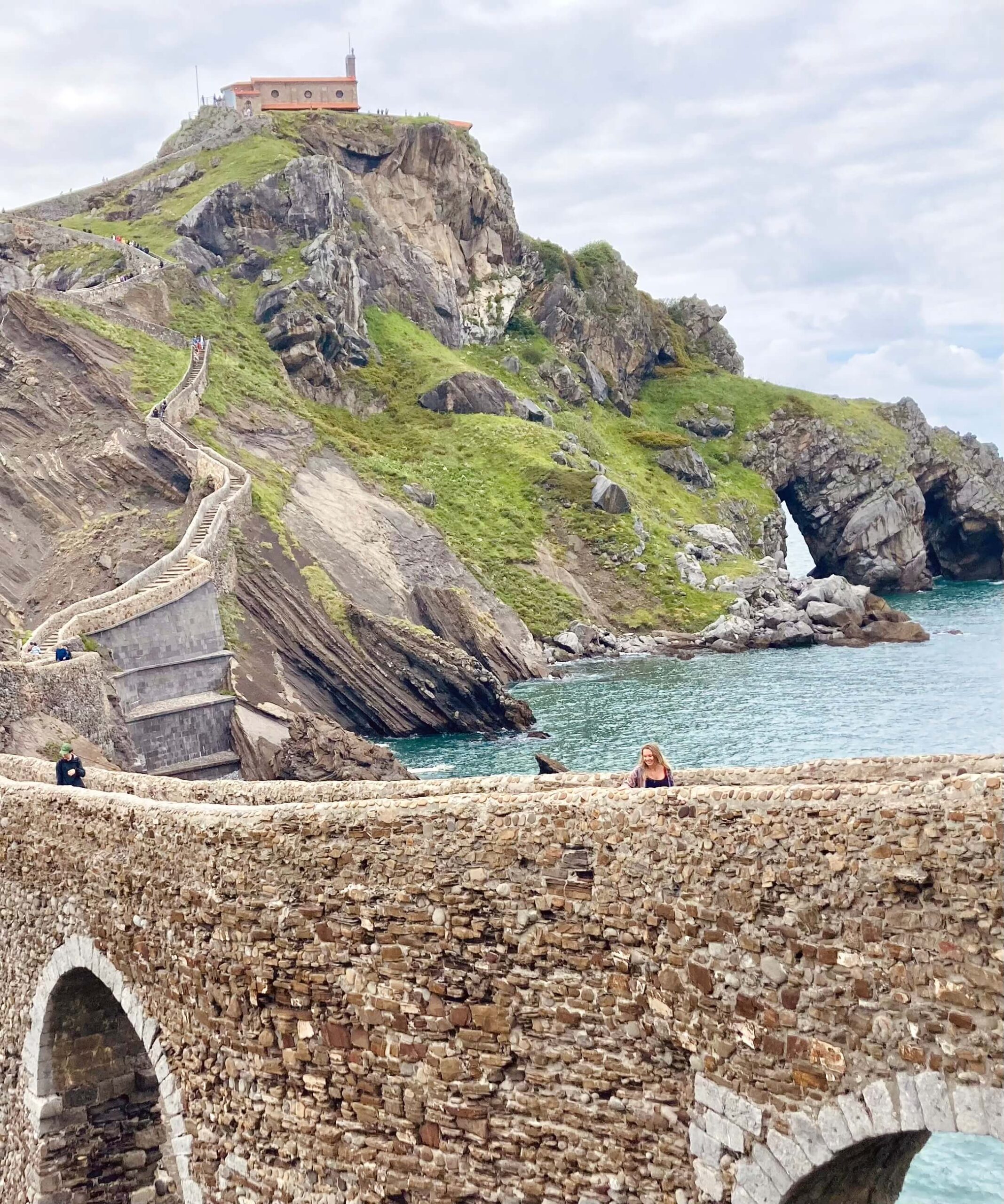
Wine Fest in Logrono and Gaztelugatxe
Especially the wine festival in Logroño and the church of San Juan de Gaztelugatxe were amazing unplanned stops that were absolutely worth it. These kinds of experiences are what make a road trip truly special.
How to get there by train, bus, and plane?
If you don’t have a van available, you can still reach the Basque Country easily by public transport. Bilbao and San Sebastián have good train and bus connections, and there are also affordable domestic flights.
BlaBlaCar is also very popular in Spain. Car sharing is widely used there and is a budget-friendly way to stay flexible without renting a car. You just need a little patience and flexibility.
My experience as a beginner surfer in Spain
Like i already said: since I already had some surf lessons in Costa Rica and Fuerteventura so I naturally felt a little more confident when I arrived in the Basque Country.
But luckily, I wasn’t completely on my own. My road trip buddy had been surfing for several years and helped me remember the most important basics. Together, we went into the water, and with his tips, I was actually doing much better than I had expected.
Do you really need a surf instructor?
The next day, however, I felt a little too confident.
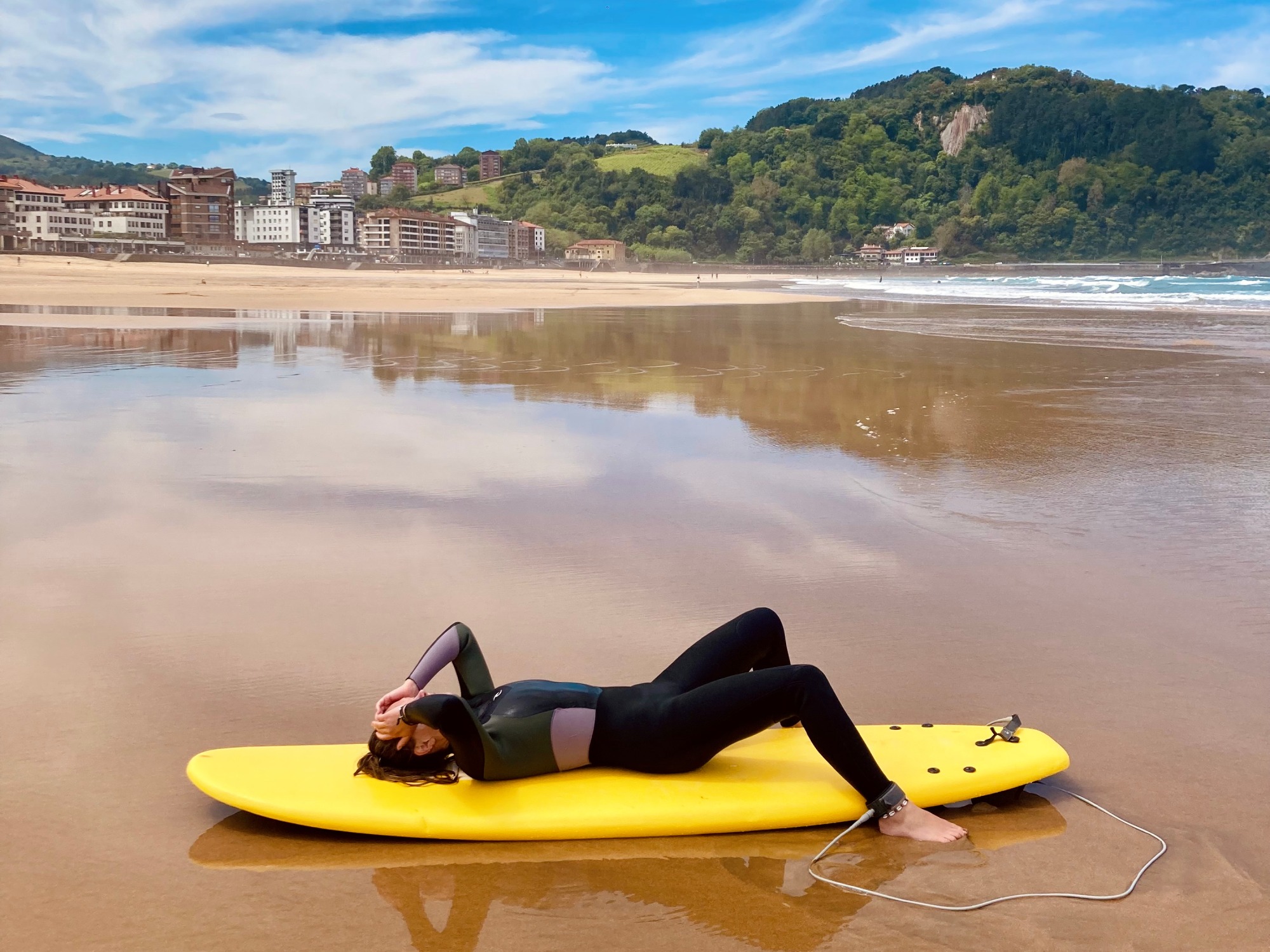
After my first Solo Surf Try
“I can do this on my own now,” I thought. And so I did. I grabbed a board, paddled out into the water, and quickly realised that the ocean had other plans. I barely caught any waves, but I still kept getting knocked off my board.
At some point, I felt like I was drinking more salt water than actually surfing.
After feeling like I had almost drowned five times, I was lying exhausted on the beach, seriously wondering what I was doing wrong.
Rescue by a Peruvian surfer
Apparently, my desperate attempts at surfing alone had not gone unnoticed.
The Peruvian surf instructor from the surf shop eventually came over to me. Later, he told me with a smile that he had been watching my attempts for quite a while and simply couldn’t ignore them any longer. So he sat down next to me and gave me a few simple but incredibly valuable tips.
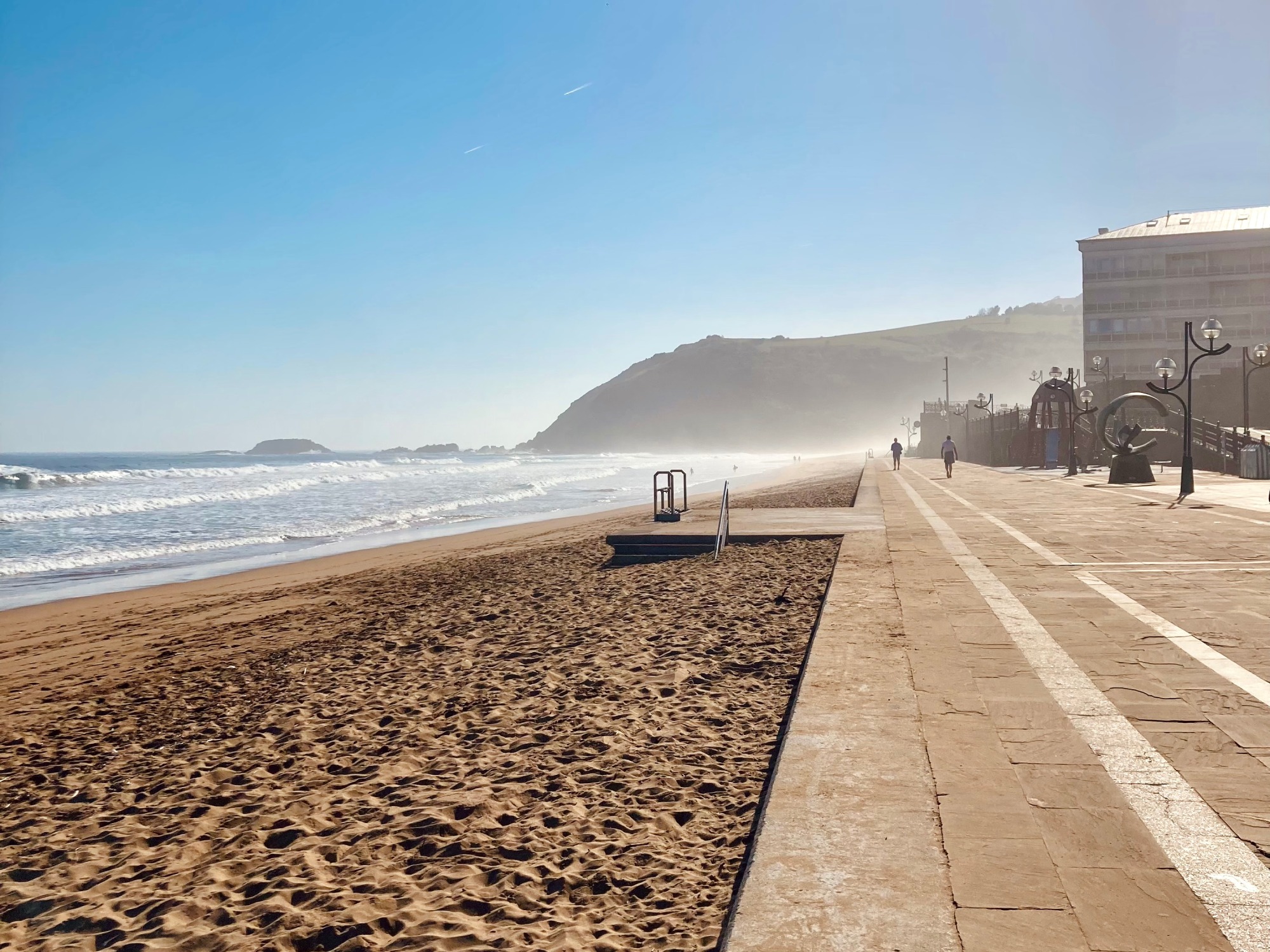
Beach of Zarautz
One of them has stayed with me to this day.
The best surfing tip
I had been paddling towards every wave in a complete panic, using all my strength. In my head, it was simple: the faster I paddle, the higher my chances of catching the wave.
But the opposite was actually true.
Because of all the frantic paddling, I was already completely out of breath before the right wave even arrived. The surf instructor explained that it was much more important to:
- stay calm
- watch the waves carefully
- start paddling at the right moment with control
Catching a wave is not about strength – it’s about timing and technique.
Once I started applying this advice, everything suddenly felt much easier. For the first time, I no longer felt like I was fighting against the ocean. Instead, I began to understand how to work with the waves, and that was the moment when surfing truly became fun.
My own tips for beginner surfers
The Atlantic Ocean is not a swimming pool – I learned that lesson in the Basque Country faster than I would have liked.
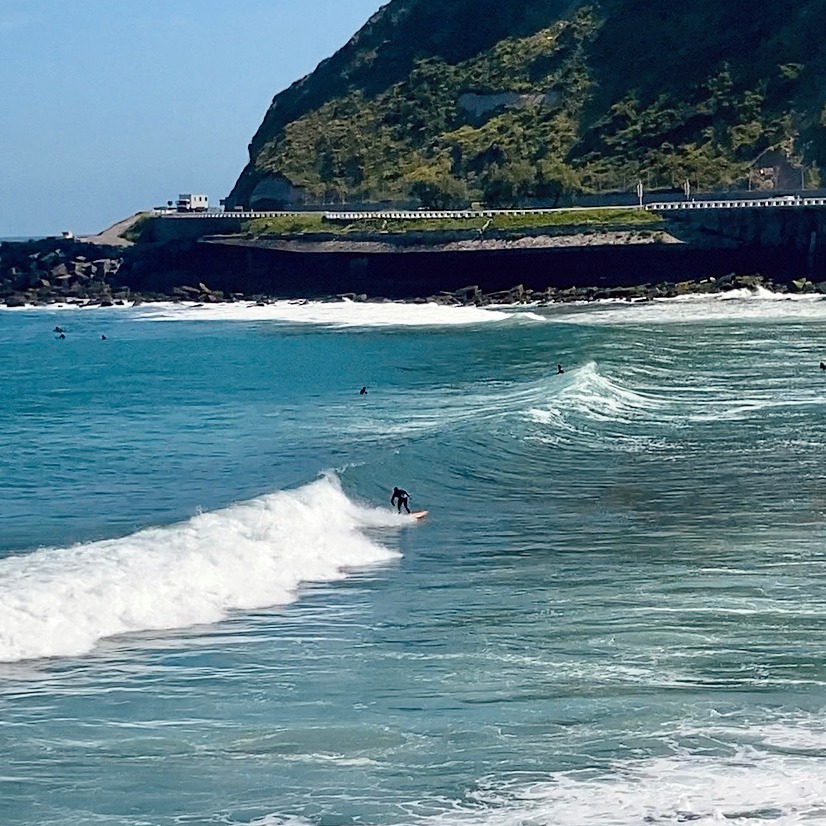
Surfer on a big wave
My friend, who was actually the one who wanted to show me how to surf, suddenly disappeared from my sight during one session. A current had caught him and pulled him further and further out. Luckily, another surfer noticed what was happening and helped him safely get back to shore.
My most important tip for beginners: listen to the experienced surfers around you.
If they tell you that the waves are too big in a certain area or that you should move a few metres further left to where the waves are smaller, don’t think: “It will probably be fine.” This kind of thinking can quickly end with you spending more time searching for your board than actually standing on it. During our week there, several beginners had already damaged their softboards in the bigger waves.
Surfing is not about catching the biggest wave. It’s about understanding the ocean and the tactics behind it. Take your time, observe the conditions, and enter the water with respect. Then surfing in the Spanish Basque Country can be an incredible experience even for beginners.
- Train to Budapest – 10 € Ticket incl. Coffee - 17. August 2026
- What to Pack in Your Daypack: Packing List for the beach - 7. August 2026
- Surfing in Spain for Beginners – Spanish Basque Country - 5. August 2026